01
Federal Appropriations
Program plus-ups, report language, new-start authority, and continuing resolution anomalies. We identify the account that determines your revenue and make your argument to the staff who write it.
Most advocacy fails because no one is in the room when the language gets written. We are in the room.
Federal policy is not decided in the hearing room. It is decided in the paragraph of report language nobody outside the process ever reads.
KPG Policy Group is a boutique government relations firm built on a simple premise: clients deserve the senior person who actually knows how appropriations and authorization work — not a junior associate assigned to their account. We take a small number of clients and we work their issue personally.
Focused federal and state advocacy for companies, institutions, and causes that need a specific outcome — not general representation.
Program plus-ups, report language, new-start authority, and continuing resolution anomalies. We identify the account that determines your revenue and make your argument to the staff who write it.
NDAA provisions, industrial base funding, and program-of-record navigation for defense contractors and emerging technology companies moving from prototype to production.
Getting your provision drafted, sponsored, scored, and carried through committee, floor, and conference — with a realistic read on what survives and what does not.
Lansing advocacy, state budget engagement, and coordinated state–federal strategy for organizations whose issues cross both capitols.
Building the outside validators that make an inside ask credible: allied organizations, earned media, third-party research, and constituent voices in the right districts.
Representation for associations, foundations, and mission-driven organizations that need federal outcomes but do not have a Washington office.
Across the United States, state child welfare agencies take the Social Security survivor and veterans benefits owed to children in foster care and use that money to reimburse themselves for the cost of the child's care. Children whose parents have died are made to pay their own foster care bills — usually without ever being told.
KPG's founder built the campaign that changed it. Not as a client of a Washington firm — as the advocate who ran the strategy himself.
The effort moved from personal testimony, to a unanimous Michigan Senate vote, to national press, to federal guidance directing every state in the country to end the practice. It was the first federal action of its kind.
That is the same sequence we run for clients: find the decision point, build the record, put the right validators in front of the right members, and be present when the language is written.
Three things separate advocacy that moves money from advocacy that generates activity reports.
Every engagement begins by identifying the specific account, program element, bill section, or report paragraph that determines the outcome. If we cannot name it, we will tell you there is no case — before you retain us.
Members and staff need a reason that survives scrutiny from the other side. We assemble the data, the district impact, the validators, and the draft language so the ask is easy to say yes to.
Legislative outcomes are decided on a schedule. Markup, conference, and expiring authorities are hard deadlines, and being early is the entire advantage. We work backward from the date that matters.
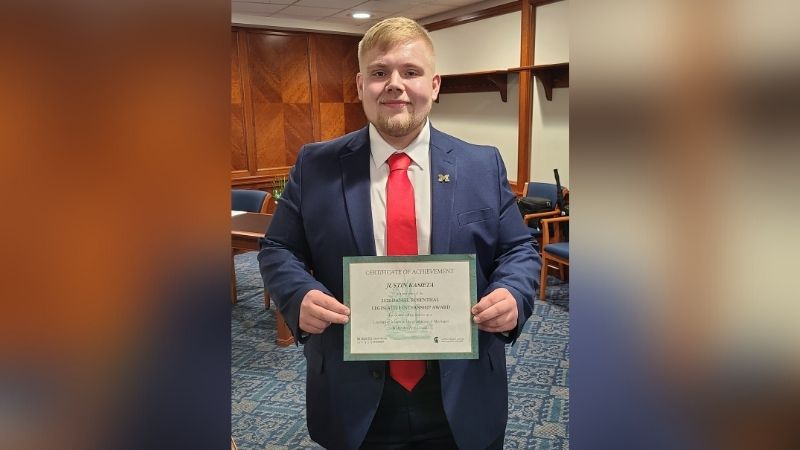
Justin founded KPG Policy Group to do for clients what he did for his own issue: take a problem with no natural constituency in Washington and turn it into federal action.
He lost his father at thirteen and entered foster care in Michigan with his four siblings, aging out in 2019. After graduating from the University of Michigan, he went into corporate investment banking — and in parallel built The Orphan Tax, the campaign that ended a practice costing children in foster care their survivor benefits.
That work took him from the witness table in Lansing to a unanimous state senate vote, national press, and ultimately federal guidance directing all fifty states to stop. He has testified before the Michigan Senate and worked with national advocacy organizations to move the issue in Washington.
Federal outcomes increasingly depend on state validators, and state outcomes increasingly depend on federal money. We work both.
State legislative advocacy, budget engagement, and the district-level relationships that make a federal ask credible.
Appropriations and authorization work, agency engagement, and coalition building where federal decisions are actually made.
If there is a decision point on the calendar and no one making your argument, that is a fixable problem. Send a short note describing the outcome you need and the deadline you are working against.
justin@kpgpolicy.com